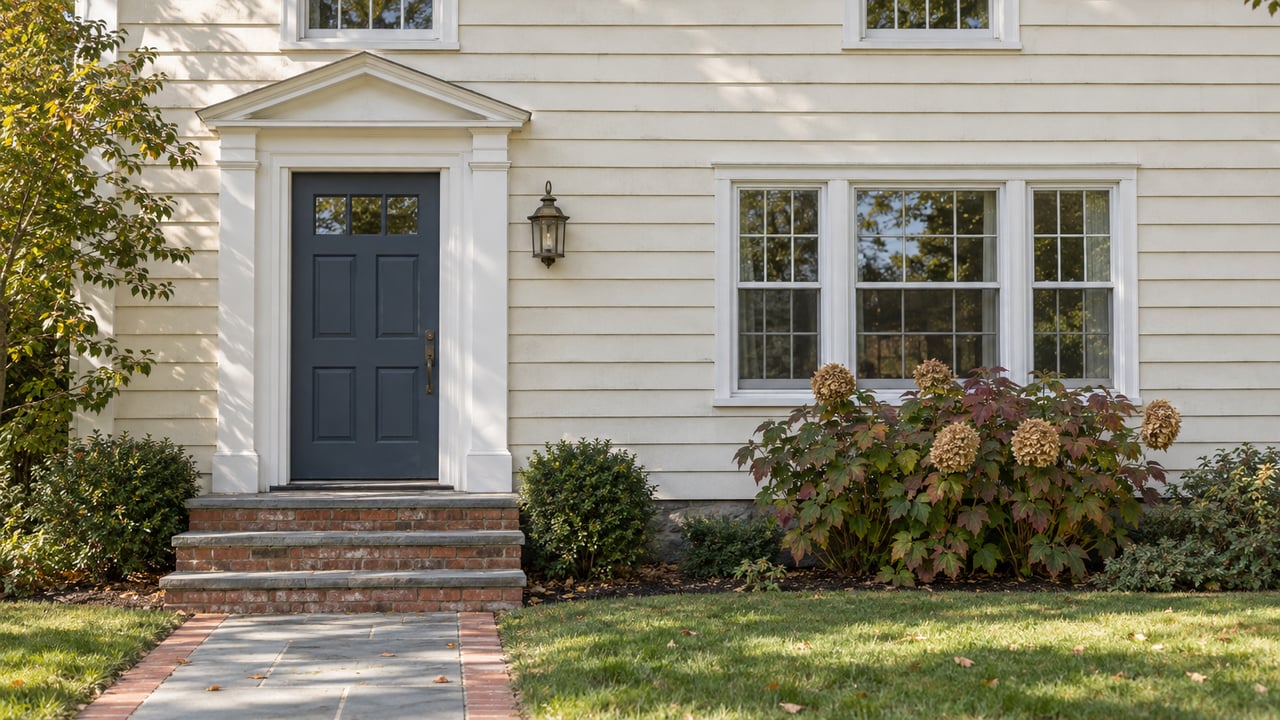
When you buy a house in Stony Brook, two documents describe it. One is the listing, with its bedroom count, finished basement and bonus room upstairs. The other is the Certificate of Occupancy or Certificate of Compliance on file with the Town of Brookhaven. Brookhaven's certificate records the permit number, the property and tax-map number, and the structure's use and occupancy classification. Close to campus, the gap between these two documents is the main thing that can push a closing off schedule. It can also leave a new owner paying to legalize work they never did.
The gap exists for a reason that can be measured. Stony Brook University's January 2026 request for qualifications estimates unmet demand at about 800 to 850 apartment-style student beds. The same document describes the nearby off-campus market this way:
"The off-campus housing market around Stony Brook University is highly constrained, with limited availability, rising rents, and low vacancy rates reaching as low as 2.3 percent in the closest areas to campus."
Every extra room near campus can earn rent, so some owners add rooms without going through the Town. A buyer who trusts the listing's bedroom count is trusting that this never happened.
What happened at 19 Salem Drive
This summer the Town showed what the gap can look like at its widest. At about 4:15 a.m. on July 2, 2026, the Setauket Fire Department put out a fire at 19 Salem Drive in Stony Brook. It started in a second-floor bathroom. A joint investigation by the Fire Marshal's Office, the Law Department and the Building Department found that a house legally permitted as a four-bedroom single-family residence had been altered into a ten-bedroom rooming house. Inspectors found bedrooms in the basement, on both main floors and in the attic, many of them numbered and fitted with key locks. Twelve people were living there, and inspectors counted 18 mattresses.
Each owner was charged with 30 Town Code violations, including running the house without a valid rental permit and making alterations without Certificates of Occupancy. Together they face up to $436,000 in fines and up to 90 days in jail if convicted. News 12 reported on July 23, 2026 that the owners pleaded not guilty. As of early October, no outcome has been reported.
Most houses near campus are nothing like this. The case still matters to a buyer, because every alteration involved, from attic bedrooms to basement rooms to a layout that no longer matches the permit, can also show up on a much smaller scale. A carpeted basement "fifth bedroom" with no permit on file is the same kind of gap.
Checking the paperwork before you're committed
Brookhaven makes the records easy to reach. Its online Public Records Search lets anyone look up permits, certificates, registrations and licenses by street number and street name. Formal requests go through the Town's FOIL portal. The 2026 Building Division fee schedule lists a $20 title company search, a $40 research fee for certificates, licenses and permits, and $15 to retrieve archived records. The Town does not publish a typical turnaround time, which is a good reason to start early.
A practical order of operations:
- Pull the address in the Public Records Search before you make an offer, and note every certificate and its occupancy classification.
- List each room the listing counts as a bedroom or finished space, and compare it with the work the certificates cover.
- Flag anything with no matching record, such as a finished basement, an attic room, a second kitchen or a separate entrance.
- Ask your attorney and title company to confirm the certificate history formally.
- Read the seller's Property Condition Disclosure Statement alongside the records, especially the questions about occupancy and certificates.
The calendar is the reason to start before you're under contract. In August 2026, single-family homes across Suffolk County averaged 39 days on market, with a $760,000 median sale price, up 7.0% from August 2025. Inventory was 3,129 homes, down 3.9%, according to OneKey MLS. Those are county figures, and OneKey doesn't publish a Stony Brook breakout. Still, in a market that moves on that schedule, a records question raised in the last week before closing is more likely to delay the closing than one raised before you sign.
What legalizing costs now that the amnesty has closed
From January 1 through March 31, 2025, Brookhaven ran an amnesty for expired residential permits and for work completed without permits. Participants could settle violations without late fines piling up, and some of those fines had previously reached $5,000. The Town said 3,211 residents took part and saved more than $3.1 million. It called the initiative a "one-time program."
With that window closed, unpermitted work goes through the ordinary permit process at 2026 prices:
| Item on the 2026 Building Division schedule | Listed amount |
|---|---|
| Construction application fee | $100 |
| Alteration/repair permit | $90 for the first $1,000 of construction cost, plus $10 per additional $1,000 |
| "Existing Improvement" penalty | Twice the applicable permit fee |
| Temporary certificate | $275 |
| Reinspection | $50 |
The fees are modest. The real cost of legalizing comes from the rest of the process. The Town Code requires work that doesn't comply to stay exposed until it is corrected, reinspected and accepted. In practice, that can mean opening finished walls. A permit application also needs construction documents, plus professionally prepared plans where they're required. All of that takes time, and the Town inspects before it issues a certificate. Whoever owns the house when the gap comes to light is the one who opens the walls. For a seller, legalizing before listing turns an open question into a clean file. For a buyer, the gap is something to resolve or negotiate before closing, not after.
A legal second unit needs its own transfer application
Some homes near campus come with a legal accessory apartment, and its rent can look like part of what you're buying. Under Brookhaven Code §85-258, accessory apartments are allowed in the A, A-1, A-2, A-5, B, B-1 and C residence districts. The owner must live in the dwelling, in either unit, and only one apartment is allowed per house. The apartment generally has to be 300 to 650 square feet, no more than 40% of the home's habitable area, and no more than one bedroom. A building inspector can approve up to 850 square feet in specified cases. Homes owned by an entity can't get a provisional license.
At closing, the key point is that the license doesn't carry over to the buyer on its own. The owner who holds it files a statement agreeing that it ends on transfer of title, or when they stop living in the property as a principal residence. The same section also sets up a separate application to transfer the license to the next owner, on forms set by the Chief Building Inspector. A transferred license is good for whatever remains of its term, and the transfer fee is set by Town Board resolution. A buyer who plans to keep renting the unit has to take that step on purpose. The house is also held to the code's conditions, and the Town won't issue or renew a license while there's a violation on the premises. The code limits a license to no more than two years and a renewal to no more than five. The 2026 schedule lists the license fee at $250. Since a 2024 change, new license and building-permit applications are filed together, the applicant posts a public-notice sign for 10 days, and the license is issued along with the alteration's CO. Before you count on that rent in your budget, check with the Building Division how much time is left on the seller's license and whether the house would qualify for a transfer.
Renting out a whole house is a separate process. Brookhaven requires a rental registration before a dwelling can be rented. A temporary registration lasts 90 days, and an inspection is required before the Town issues a 15-month registration. The application states the permitted maximum occupancy and includes an affidavit acknowledging the Town's limits on unrelated occupants.
What the seller's disclosure form asks
New York's Property Condition Disclosure Statement has to reach the buyer or buyer's agent before the buyer signs a binding contract. It reflects the seller's actual knowledge, it isn't a warranty, and it encourages buyers to check public records. Two questions on the current Department of State form bear directly on this issue. One asks whether anyone else has a lease or other right to use or occupy the property. The other asks whether there are certificates of occupancy for it, and requires an explanation if the answer is no.
Sellers used to be able to skip the form by giving the buyer a $500 credit. Chapter 484 of the Laws of 2023, signed September 22, 2023, removed that option. It took effect 180 days later, which works out to March 20, 2024. For a Stony Brook seller with an extra room the Town has no record of, the certificate question is now one they have to answer in writing.
The campus beds on the way, and when they arrive
Some relief is scheduled. Stony Brook's Tabler residence hall project, now under construction, is expected to add 310 beds in 53 suite-style units, with completion expected in Fall 2027. The larger West Campus mixed-use initiative proposes 800 to 850 apartment-style student beds, about 280 parking spaces and roughly 25,000 square feet of ground-floor retail and dining on a 16.7-acre site. Its target is student occupancy for Fall 2029. The University says it is the permitting agency and does not expect local or state land-use approvals to be needed. The procurement page's last update is a March 2, 2026 deadline for qualification submissions, and no development partner has been announced there. A later workforce-housing phase is up to the University. The RFQ puts demand at about 1,800 employees and at least 570 beds.
Taken together, the project that would roughly match the University's own estimate of unmet demand is still at the qualifications stage, three years from its target date. The demand behind unpermitted bedrooms near campus is likely to last at least that long, so any house that changes hands before then should still get the records check.
Quick answers
Does a missing certificate always mean the work is illegal? Not necessarily. Records can be archived, and the 2026 fee schedule includes a Certificate of Existing Use application at $165 for residential property. The schedule doesn't say who qualifies, so ask your attorney and the Building Division how it applies to a particular house.
Is a sixth bedroom ever simply a fee issue? The 2026 schedule has a rental-fee line for one-family dwellings with more than five bedrooms, at $500 per bedroom. That is a fee category. It doesn't approve rooming-house use, and the rooms themselves still need permits and certificates.
Who pays to legalize, the buyer or the seller? That depends on the contract and your attorney's advice. The Town looks to whoever owns the property, so settle it before closing.
Whether you're making an offer near campus or getting ready to list a home with a finished basement, Kate Works can help you line up the listing, the Town's certificates and the disclosure form early, while there's still time to fix any gaps. Start your Long Island home search with a Stony Brook file that holds up at the closing table.